
Pricing Advantage: Why Pet Parents Choose After-Hours Urgent Care Over ER
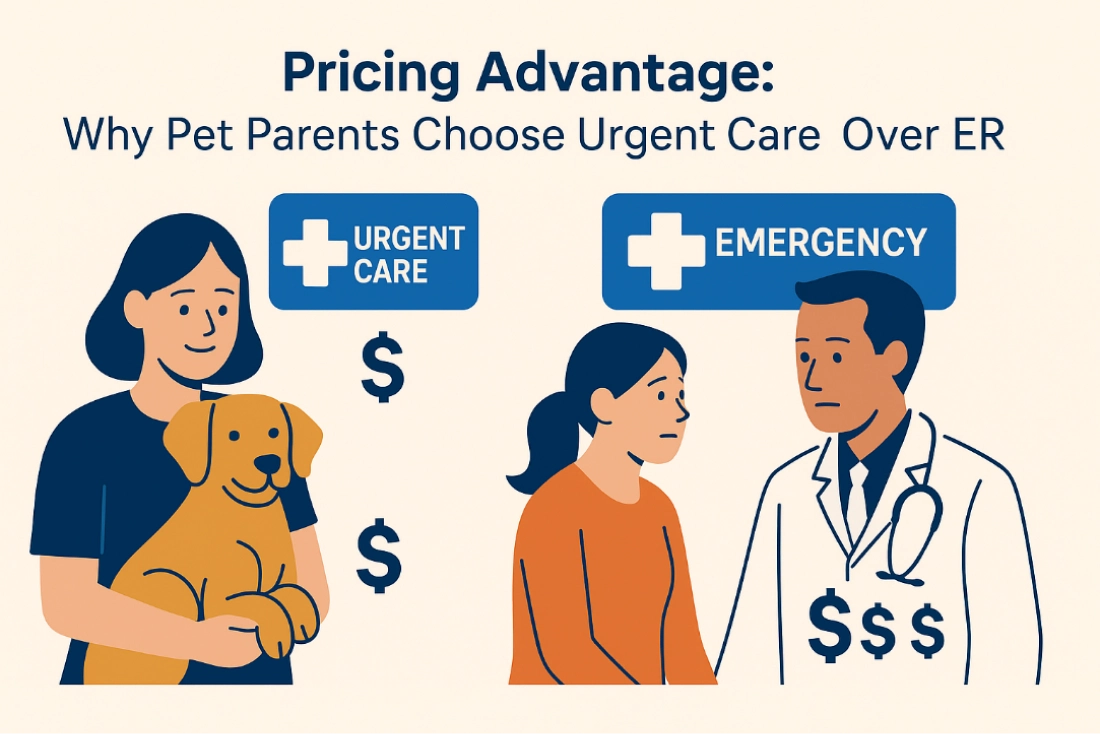
For pet owners, the decision to seek care after hours often involves weighing urgency against cost. When a condition is not life-threatening but cannot wait until morning, the emergency hospital has been the only option. Yet ER pricing is often disproportionate to the level of care required. Urgent care provides a middle path—clinically appropriate, accessible, and more affordable. For general practice (GP) owners, this pricing position delivers both client satisfaction and financial benefit.
The Cost Differential
Emergency hospitals are structured for critical cases, and their pricing reflects that readiness. An ER exam fee alone can exceed $150 – VEG charges $175 – with even minor treatments driving costs into the high hundreds or thousands. General practices sit at the other end of the spectrum, where a typical exam is $60–75.
Urgent care fills the space between. Exam fees often range from $90–150, with total bills 20–50% lower than an ER for the same problem. For cost-conscious pet owners, that difference is significant, particularly as household budgets are strained.
Why Clients Choose Urgent Care
Two factors drive client demand: affordability and access. Families want care that is prompt and appropriate, without paying emergency-level prices for conditions such as ear infections, lameness, or minor wounds. Evening and weekend availability addresses this need directly. When urgent care is offered at a moderate fee, clients respond—choosing it over ER and reinforcing loyalty to the practice that provides it.
Economic Advantage for Practices
For GP owners, the economics are compelling. First, urgent care attracts revenue that would otherwise leave the practice for the ER. Second, it does so at a lower cost structure than starting a standalone urgent care clinic. By using the existing GP facility, capital investment is minimal. Exam rooms, diagnostics, and infrastructure are already in place. The model requires only incremental staffing and extended hours, not new construction or significant equipment outlays.
This lower capital cost is central to the business case. De novo urgent care clinics carry high start-up expenses, often requiring outside investment. By contrast, a GP extending hours into evenings and weekends leverages sunk costs, improving profitability more quickly. Each urgent care visit contributes revenue at a relatively low marginal cost, strengthening overall practice performance.
Beyond Price
The pricing advantage also creates qualitative benefits. Clients avoid the frustration of long ER waits and inflated bills. Staff work in a familiar environment at a steady pace, without the stress of constant life-or-death cases. The result is a service line that builds goodwill, retains clients and attracts new ones, and enhances the reputation of the practice.
A Position of Strength
Urgent care pricing is not an experiment—it mirrors the same model that transformed human healthcare. By positioning fees between general practice and emergency hospitals, urgent care satisfies client demand while generating profitable growth. For GP owners, the ability to launch this service from the existing facility reduces investment risk and accelerates returns. As a result, urgent care is not only a clinical solution but also a strategic lever for strengthening profits and long-term practice value.
